
This article appeared in TTG media trade magazine on 11th November 2025.
An agent’s viewpoint: ‘There’s an aura of change in the Maldives, which has me conflicted’

A Travel Counsellor and TTG Sustainable Travel Ambassador is charmed by local island tourism in the Maldives, but finds the experience also leaves her with mixed emotions about the archipelago’s future
As I sit on the rooftop terrace of a cafe sipping a sweet lemon tea, I take in the island life going on below me. Today is Friday, the day of prayer for the local Muslim population on the tiny island of Fulidhoo, and the streets are quite empty but every so often a three-wheeler mini-van chugs by brimming with supplies.
A few locals wander around unhurriedly, and children ride their bikes around the sandy streets. A naturally reserved culture, the Maldivians greet me with a shy “hi” when I pass them in the streets.
From my vantage point I look across the tin roofs, papaya trees and flower-filled streets over to the perfect blue hue of the Indian Ocean. There are a smattering of souvenir and grocery shops, piled high with beach items, but still it feels mercifully far from an over-touristed island.
I owe my visit here to meeting Ruth Franklin, a British expat, on a webinar a few months ago. Ruth moved here 13 years ago to set up Secret Paradise Maldives, a tour company specialising in positive impact travel, conservation and local experiences.
Fulidhoo has the same pristine beaches and marine life which draw thousands of tourists to the resort islands every year, however the experience here is completely different.

A history of tourism
The Maldives was once an undiscovered archipelago, until the first island resort (Kurumba) opened in 1972, offering a simple ‘back to nature’ experience. As of 2025 there are now 174 operational island resorts and the Maldives has firmly cemented itself as a world-renowned luxury destination.
Until 2009 the Maldivian government kept the local devout Muslim population and the bikini-wearing, alcohol-drinking tourists totally separate. A change in the law in 2009 meant local island tourism was born and has been growing steadily ever since.
Getting to the local islands is as easy as getting to the resort islands, using scheduled speedboats or domestic flights. The islands of North and South Male Atoll are the most developed, while further away from Male, in the far north and deep southern atolls, you will be rewarded with authentic character, lush rainforested interiors, freshwater lakes, historical palaces and perfect white sand beaches.
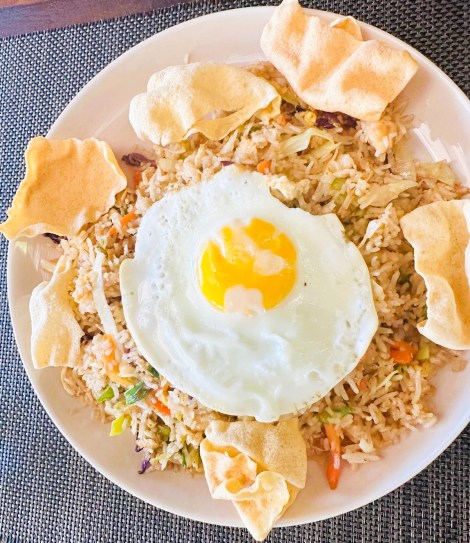
Here in Fulidhoo, whilst we are surrounded by local life, tourism has already arrived. There are half a dozen restaurants, serving mainly local food but some trying to cater to Westerners too. Tourism is in its infancy and times are still hard here, for example at our (lovely) guest house they don’t actually have much of what’s on the menu “today”. Personally, rather than seeing this as a failing, I find it endearing.
We have seen perhaps 20 or so other tourists since we arrived and we have gorgeous beaches to ourselves. The local people are so welcoming and trying so hard, that it’s unimportant they don’t always get it right. The logistics of building a restaurant business on this island have to be very challenging.
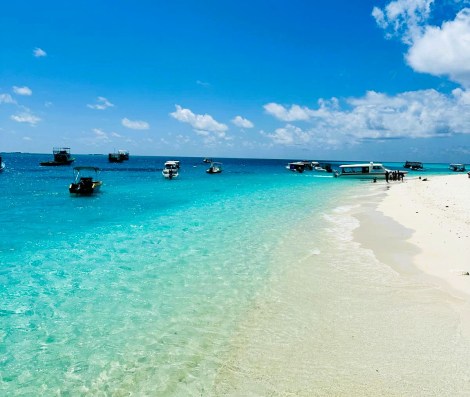
This is a pint-sized island of 11 hectares and around 300 people. The beach wrapping the perimeter can only be described as utterly perfect. Pristine turquoise waters lap the shores and the house reef is a few strokes away, where colourful fish and marine life are abundant.

A few steps from our guest house is the local school, its sandy courtyard full of children dressed in smart green uniforms – their teachers come from India, attracted by a government package including board and lodging.
On Friday we see families playing in the sea together, swinging in the ubiquitous hanging net chairs, and fishing. Every evening the local men gather in the ‘sai hotaas’, (local tea shops) and socialise. These venues are an important part of the local culture and are a beautiful insight into Maldivian life away from the resorts.
The main industries on the island are fishing, construction and tourist-related activities. Every evening, down at the jetty, fishing boats bring in the day’s catch, while nurse sharks and rays can be spotted under the lights to the delight of my children.
Protection of the Maldives’ most valuable tourism asset, the marine life, has never been more important. Secret Paradise Maldives promotes only ethical snorkelling and dive trips. Until recently unethical practices such as shark and ray feeding were common across the islands. Despite the fact that this is now officially illegal, it is not policed and still practiced daily by many day trip operators.
A kind of utopia it may seem, however there’s an aura of change around here. How long can this kind of paradise be kept a secret in today’s world of ultra-accessible travel? Construction is happening at an alarming rate as local islands gear up for tourism, presenting a juxtaposition for sustainability enthusiasts like myself and Ruth. The local islands need this money injected into their economy, and they are clearly embracing tourism, but is anyone checking the pace of development?
Opening up local islands to tourism is beneficial to local communities, however with island councils varying wildly in their grasp of sustainability principles, there is a fear that fast, unchecked development could lead to overtourism and ultimately serious damage to the environment and marine life. In years to come will these islands be overrun with guesthouses and tourists?

Mind-blowing pace of development
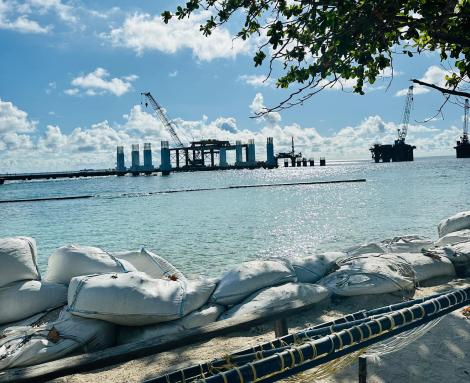
Back in Male, we are taken on a tour by local NGO, Save the Beach. The pace of development is mind-blowing in the capital. When I first came to Male 20 years ago, it was essentially made up of two islands – the tiny airport island and the main capital city. By the early 2000s Male’s population had grown so much, it was bursting at the seams and a new island, Hulhumalé, was created from reclaimed land, which now houses more than 65,000 people. In 2018 the Chinese government part funded a $350m bridge project between Male, the airport and Hulhumalé, changing the way Maldivians live and the skyline permanently.

We continue by boat to a nearby natural island, Vilimale. This was once a prison, a quarantine island and then a resort. It’s now a residential island with a population of 6,700. Save the Beach has been at the forefront of conservation on this island for the last 10 years, lobbying the government to consider the marine life and natural beaches as it builds yet more islands and harbours, educating locals on conversation issues and carrying out reef conservation projects, however they face an uphill struggle.
It is estimated that only 10% of the money a traveller spends on going to a resort island in the Maldives actually makes its way into the local economy. Many of the resort islands are part of foreign-owned chains, who employ mostly low-paid immigrant workers. Maldivian people are relatively well educated and speak excellent English, they don’t want to do minimum wage jobs, and they welcome the opportunity to build their own businesses as part of local tourism.
The future of this paradise lies in the hands of local government, and we can only hope that the politicians value the precious natural gifts they have been given enough to actively preserve them.
However, as tourists we can help to secure the Maldives’ future by travelling with organisations such as Secret Paradise Maldives who are actively involved in sustainable development. They use only small, locally owned guesthouses, they work with local NGOs on conservation issues and their tours are led by their team of local guides, who have a genuine passion for the future of the islands.
If you want to travel with positive impact to the Maldives get in touch!
Caroline.Joyner@travelcounsellors.com
 joynerjournal.co.uk