
Have you ever wondered how easy it would be to hop amongst the Cyclades by ferry? Read on for my island hopping experience between Athens, Tinos, Mykonos, Naxos and Santorini with G Adventures.
Athens
The frenetic pace of Athens hits you immediately. The noise, the heat the traffic, the people. We wander down streets lined with market-type shops selling spices in large sacks and find ourselves in a square lined with handsome neoclassical buildings. We continue ambling until we reach pedestrianised streets filled with flowers, souvenirs shops and restaurants. Plaka, originally the Turkish quarter, now draws the tourist crowds, cobbled streets, souvenir shops, and rooftop bars nestle into the northeast slope of the Acropolis. For a while, it feels like you could be in any Mediterranean tourist area until you happen across the vast ruins of Hadrian’s library from the 2nd century AD and the sprawling ancient Agora, and this is suddenly unmistakeably Athens, a city where Byzantine buildings, modern office blocks, neoclassical architecture and ancient ruins are all within a stone’s throw from each other.
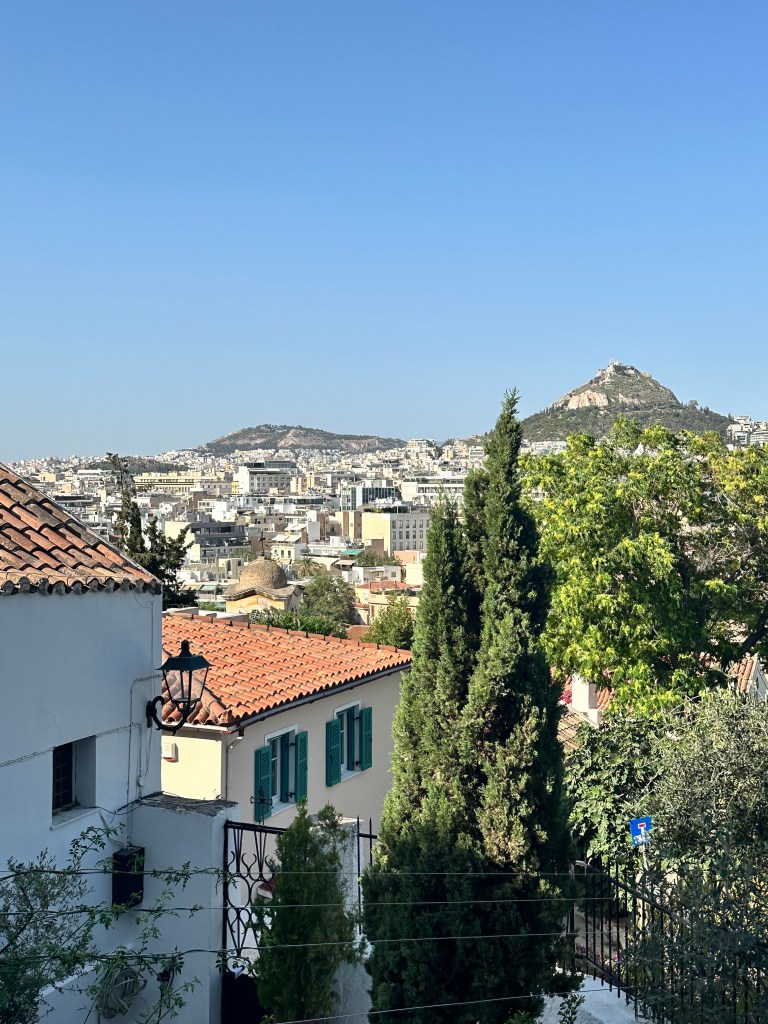
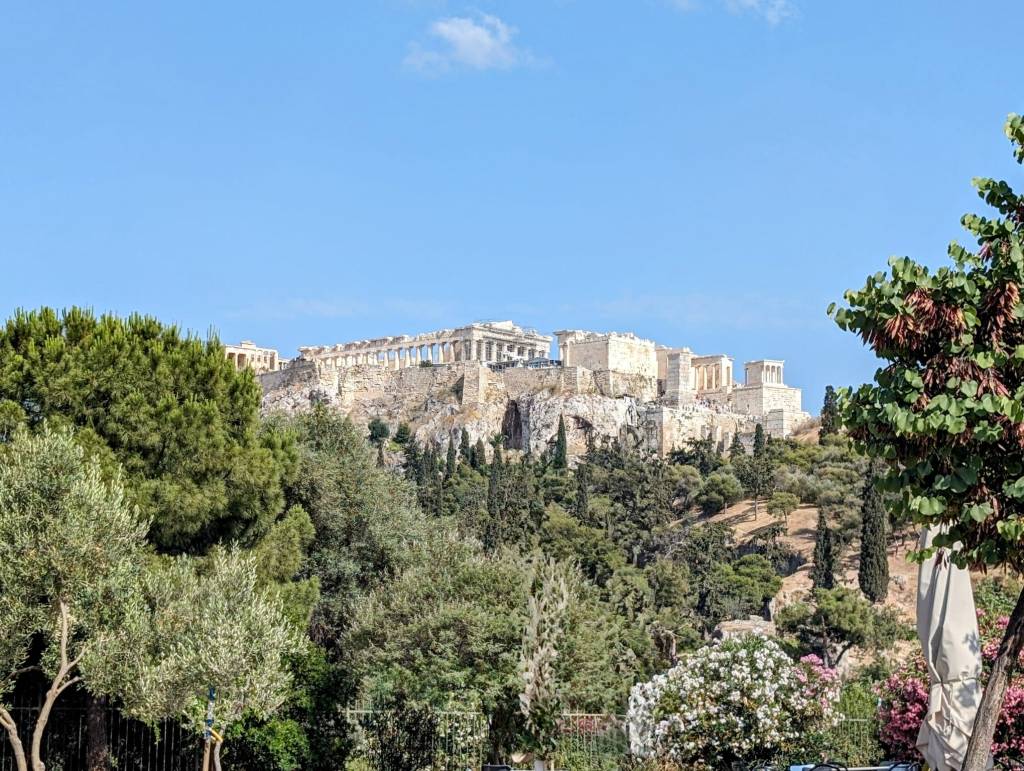
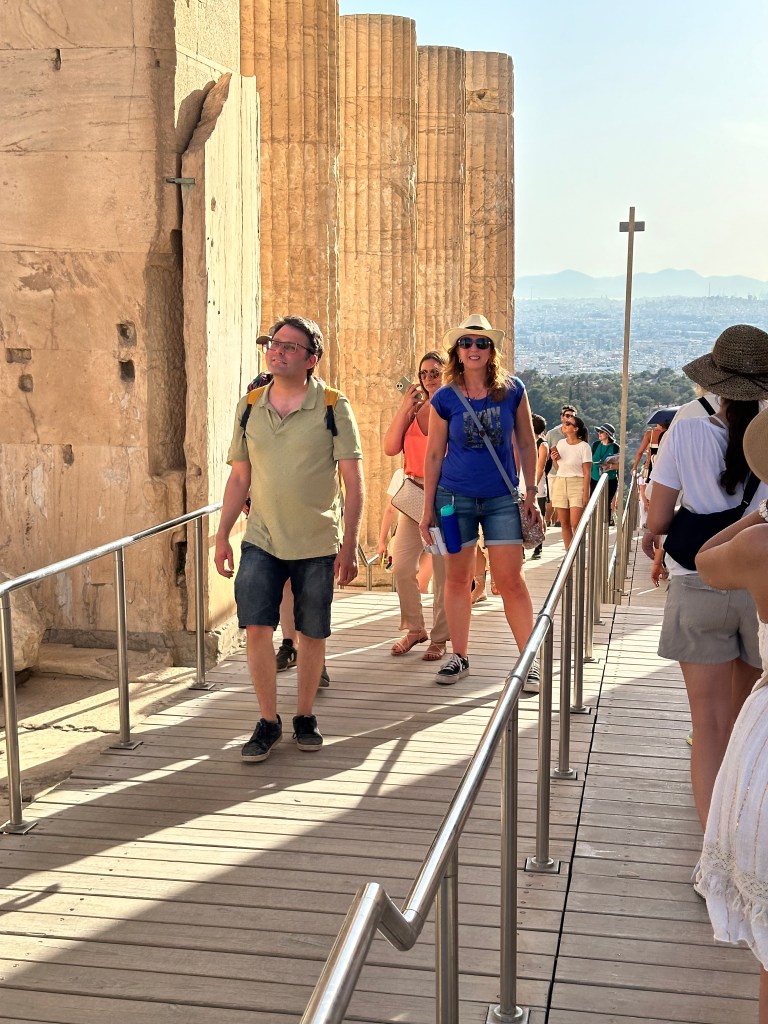
It’s 36 degrees and the climb to the acropolis is a hot, sweaty affair, but the far-reaching views across the city to the surrounding mountains are our reward. After a minor mix-up with tickets (see top tips!) we are suddenly transported back to the world two and a half millennia ago, we feel like tiny beings, dwarfed by the gargantuan marble columns of the Parthenon. The glory of Ancient Greece is all around and the white marble gleams in the early evening sun. The crowds are difficult to navigate, even though it’s now 6pm. We leave feeling overwhelmed but inspired.
Athens is not just the home of iconic monuments, it also has a buzzing nightlife scene with rooftop bars, electric restaurants and clubs.
That evening we are welcomed by Sam, our energetic, charismatic guide from G Adventures, who gives us the low down on Greek etiquette – ignore zebra crossings he urges and don’t put toilet paper down the toilet!
As we glide out of the port at sunrise the following day we can see that one afternoon in the city was definitely not enough.
Tinos
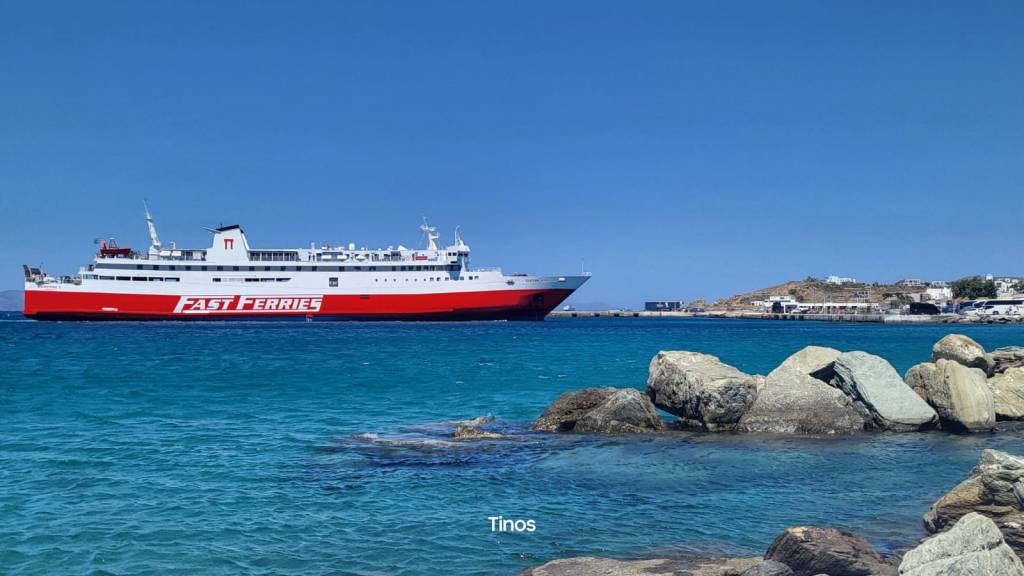
A mere three and a half hours from the high pace of Athens, we sail into the island of Tinos, our first stop in the sleepy Cyclades islands. Cyclades means “circle” in Greek, and these 37 islands form a circle around the tiny island of Delos, the birthplace of Apollo and Artemis and the most sacred of all the Greek Islands. Tinos is the 3rd largest island in the Cyclades, with a population of around 9000. The pretty port town is looked over by the neoclassical church of Panafria Evangelistia which has drawn pilgrims from all over Greece since ancient times. Tinos remains one of the most important sites of Greek Orthodox worship today, pilgrims come here to crawl up the main street to the church on their knees in order to give thanks for the healing powers of an ancient Virgin Mary icon which is found in the church.

Behind Tinos Port, there is a wonderful maze of narrow streets hiding quirky souvenir shops, bars and tavernas.

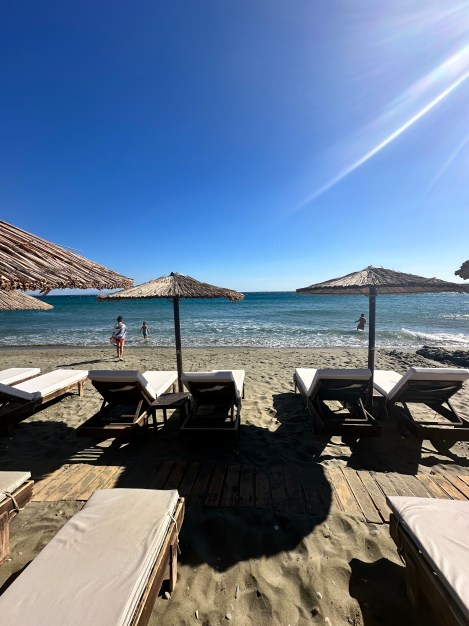
Its wild and rugged coastline also offers some beautiful (pebbly and sandy) beaches – from boho beaches with chic beach clubs in the south, to secluded surfing coves in the north.
However, the real beauty of this island lies inland, as we discover on a tour led by a local guide, Sophia who was born on the island. The rural interior consists of terraced hillsides, mountains, unspoilt villages, and fascinating history.

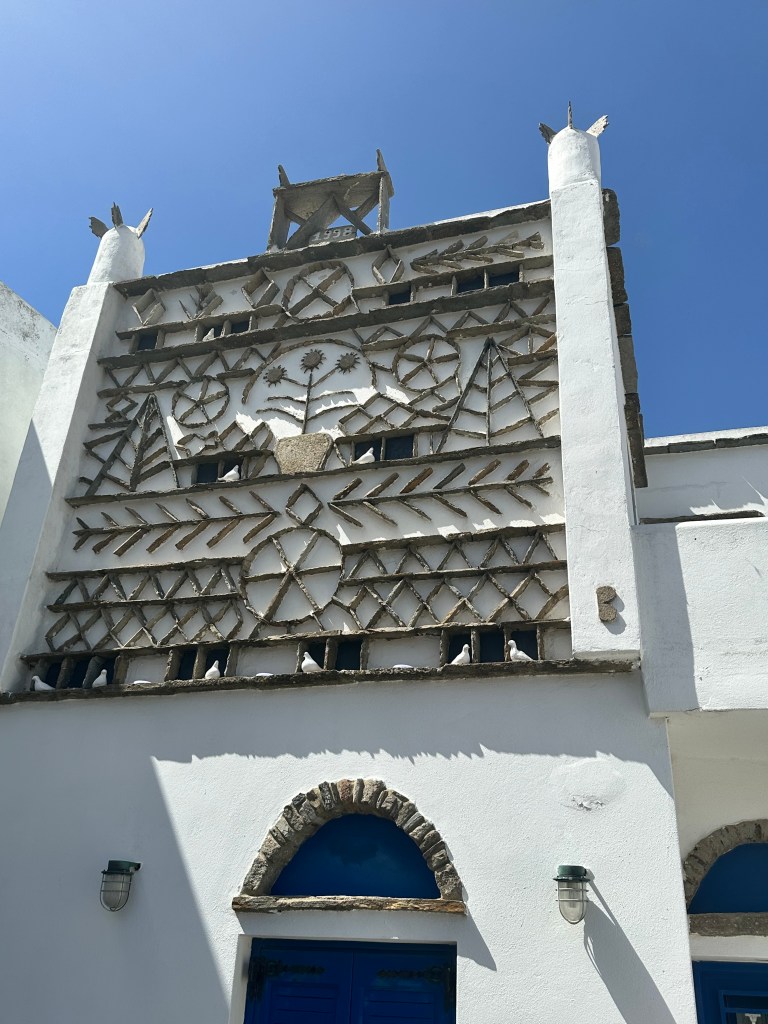
Ornate ‘pigeon houses’ and abandoned windmills built during 500 years of Venetian rule are dotted around the landscape.
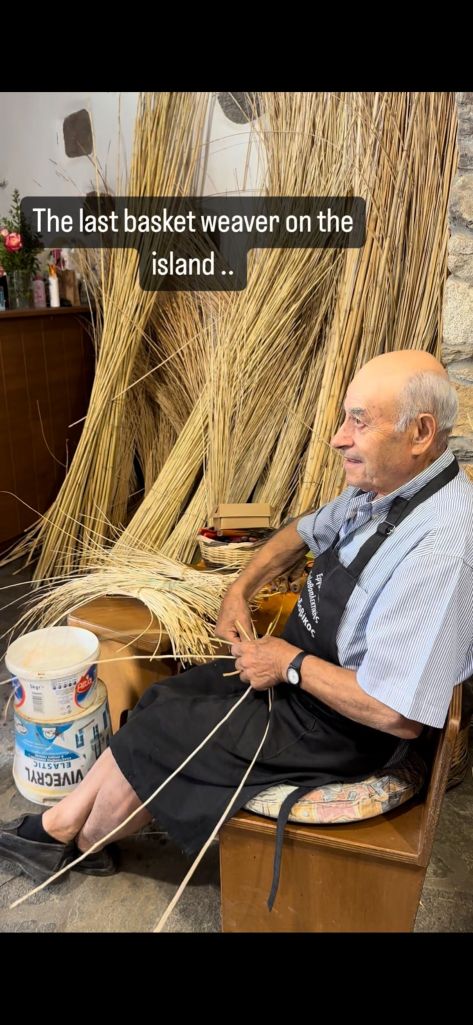
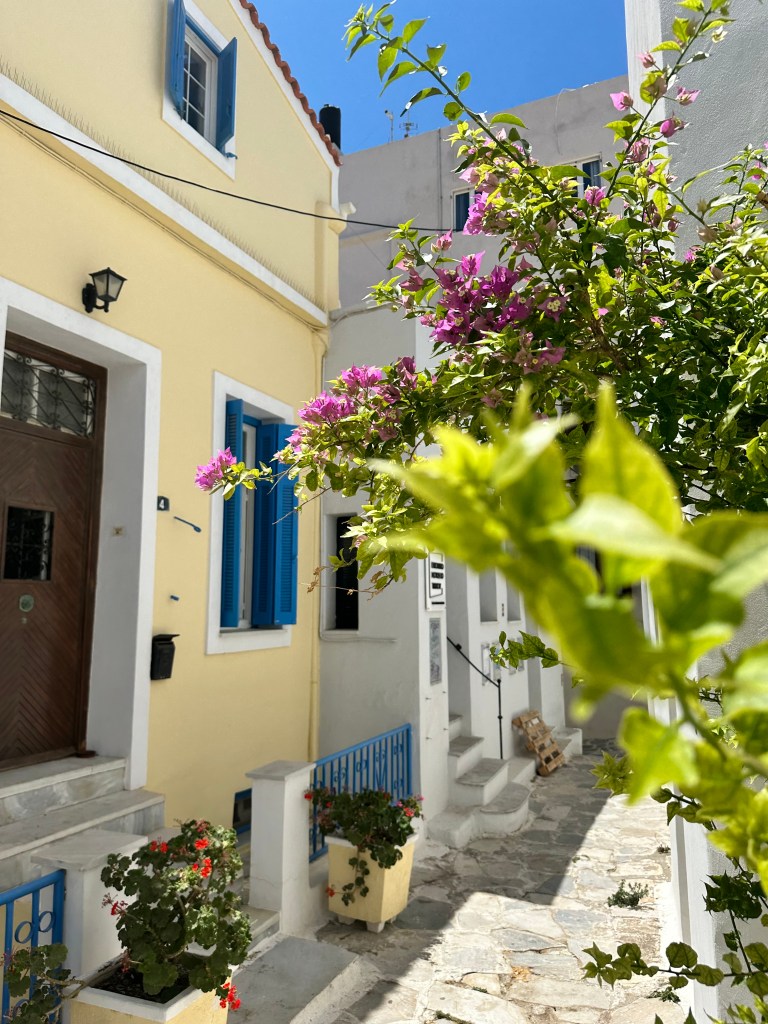
Each of the villages has a distinct character and history. Dioc Choria is a perfectly preserved medieval village with labyrinthian alleyways of unpainted stone houses, all designed with no open spaces so its inhabitants could hide easily in the face of a pirate invasion. Volax sits within the low hills and is a picture-perfect village of whitewashed houses and bougainvillea-filled alleyways with far-reaching island views around each corner. The island of Tinos has a strong arts and crafts tradition and it is here we meet 75-year-old Ludwig, the last basket weaver of the island’s long tradition, in his basket shop. He shows us the incredible effort needed to hone the raw bamboo materials before the painstaking weaving begins. We also visit a tiny community-run museum of medieval artefacts proudly shown off by one of the locals.
Finally, after weaving through the hills with beautiful sea views and hilltop chapels, we arrive at Pyrgos, the centre of the local marble industry since the 18th century. It is still home to many famous marble sculptors and artists. We watch marble artists at work, before wandering around the beautiful marble streets adorned with statues and a village square straight out of a film set.

As we walk around each of these villages drinking in the Instagrammable sights around every corner, we realise that we have had all the villages almost completely to ourselves on this mid-June day. It is as though they had been placed there just for us to experience, we only saw a handful of other tourists in the whole day. This to me felt like such a precious moment in a place where islands increasingly suffer from over-tourism.
That night, wandering again around the maze of backstreets in Tinos town, there is a low-key buzz about the squares – restaurants are full of weekending Athenian families and again we feel like the minority as foreigners – rare in the Greek islands.

Mykonos
A 30-minute hop on the ferry brings us to Mykonos for the day. We take a 5-minute water taxi from the new port to the old port and are immediately overwhelmed by the crowd-lined streets. One of the Greek island’s ultimate Instagram spots (along with Santorini), sexy Mykonos definitely loves up to the hype.

The trademark Cyclades deep pink bougainvillaea sprawls over the and white-washed walls and the blue doors are set off against the warren of narrow streets. The sky and the sparkling blue water almost merge here.
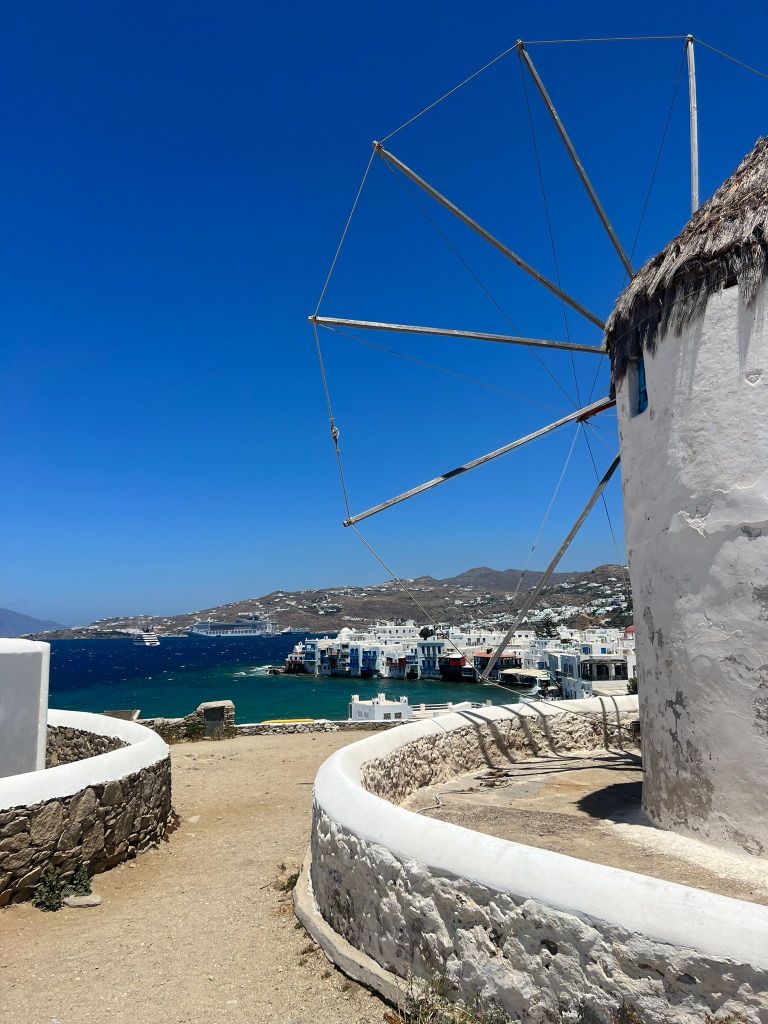
This is the home of beautiful people and the Ibiza vibe attracts the glamour set who come here to party in one of the many beach clubs. Prices are around a third higher than Tinos. Hip hotels, high-end boutiques, and chic cafe bars are crammed into the paved streets, standing next to tiny old churches. The picturesque buildings of Little Venice clinging to the cliffs are overlooked by the town’s famous white windmills.
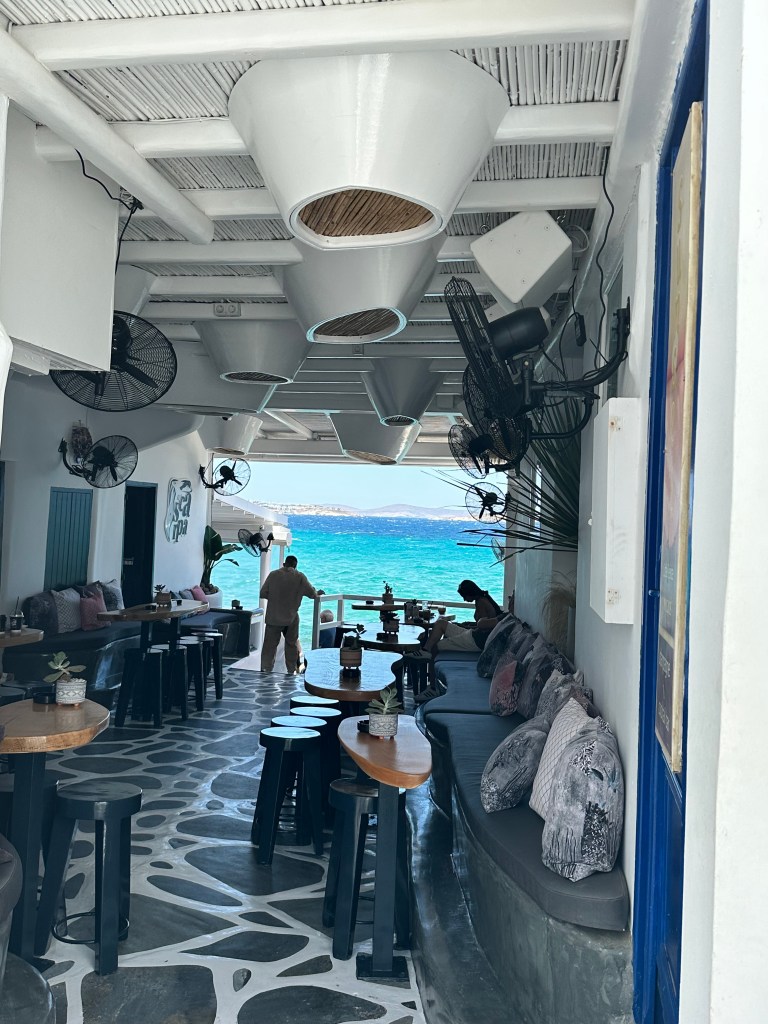
We arrive at the perfect time, it’s busy but bearable. Later on the cruise ships dock and restaurants of the old town throng with the mass of day trippers, and for me personally a part of the magic of this stunning town is lost.
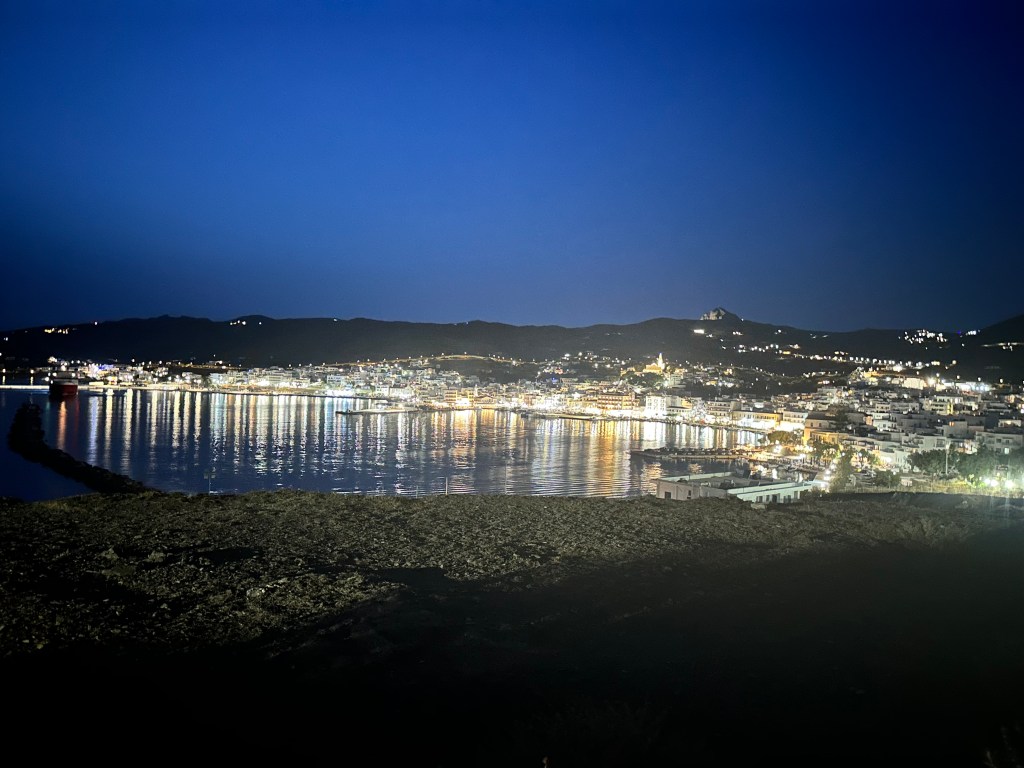
Most of the group though agree that we are glad to arrive back to Tinos that evening which feels a lot more real. Sam takes us to a cliff top above the town and we watch the sun set over Tinos town with our Giros pittas, it feels like an authentic Greek island moment.

Naxos
Naxian wine is said to be the antidote to a broken heart, Sam tells us informatively as we arrive. It’s not hard to see why. The greenest and largest of the Cyclades, Naxos has mountainous views wherever you look and is home to the highest peak, mount Zeus which you can climb in 2-3 hours if you hire a car. Its fertile agricultural lands grow a wealth of delights – olives, grapes, figs corn and potatoes.
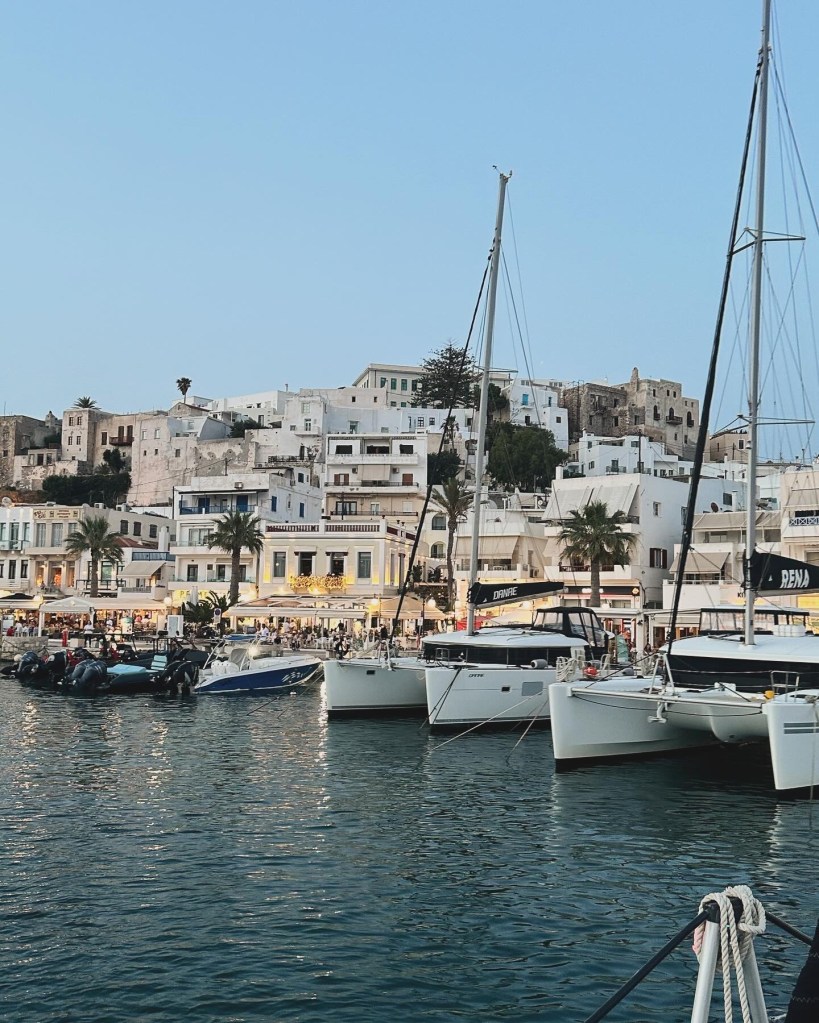

Naxos town is another quintessential Venetian tangle of steep cobbled alleys containing boutiques, craft shops, bars and restaurants. Getting lost here is par for the course. The marina houses some good-looking yachts and is lined with touristy but beautiful restaurants in an enviable setting. The town has a bustling touristy vibe with plenty of rooftop cocktail bars but somehow it still retains some authenticity, perhaps because there is no international airport here, so it lacks the mass tourism of many other of the Greek Islands.
The following day we discover that Naxos is all about the beaches. Long stretches of golden sands adorn the southwest coast at Agios Prokopias, Agia Anna and then Plaka. Agios Prokopias is a small resort with a wide sandy beach and some uber-cool beach clubs, continuing along the coastal road you eventually reach Plaka, a narrower stretch of gorgeous beach and clear waters. An efficient local bus service connects Naxos town with the beaches every 30 minutes which makes getting around a breeze.


That evening Sam hires a catamaran from Naxos town and we sail over to Paros for swimming, snorkelling and paddle boarding. As the sun sets we are lucky enough to witness a pod of dolphins jumping through the waves, Sam is a little emotional as he explains he hasn’t seen dolphins in Greece since he was 14!
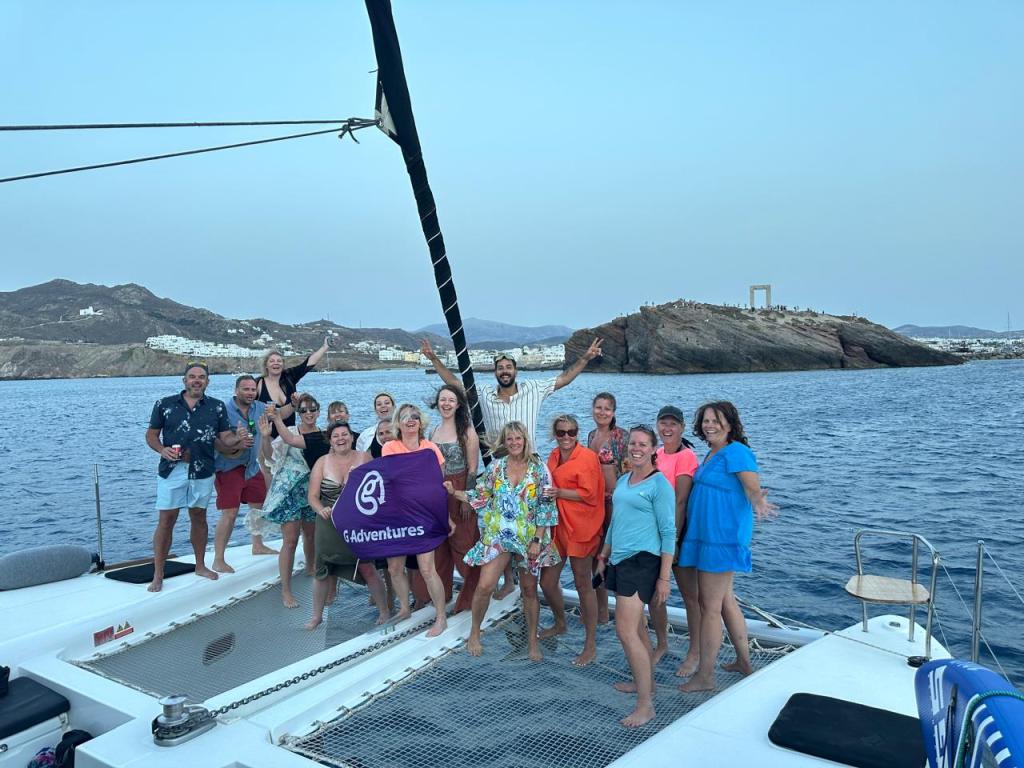
The combination of the colourful old town, pretty scenery and beautiful beaches wins all our hearts and many of the group plan their return to Naxos.
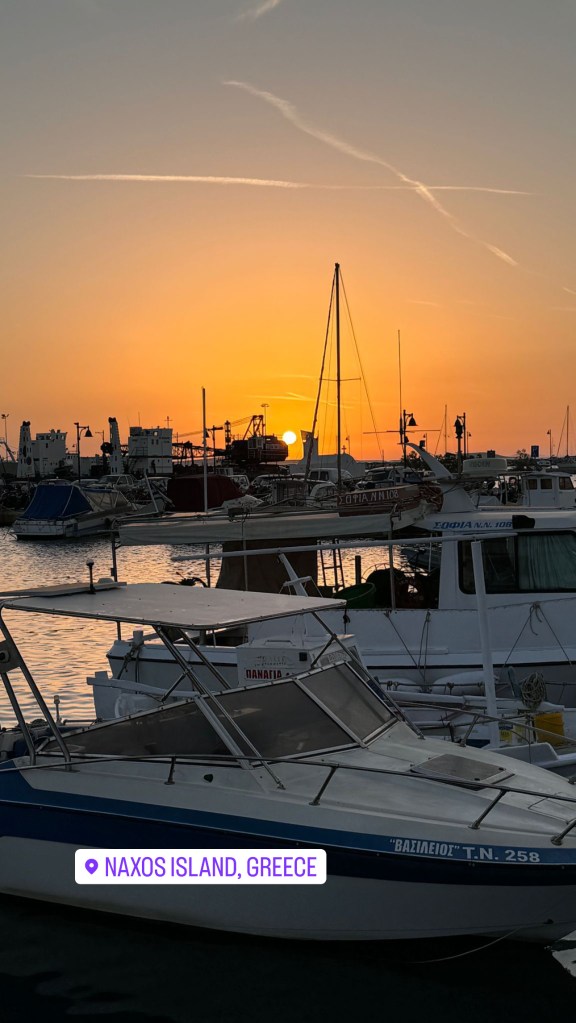
Santorini
We leave Naxos on a huge six- storey ferry which feels like a mini cruise ship. By now, we are well versed in the Greek island ferry routine: we always arrive early to get to the front of the (very hot) queue. We leave our luggage on the lower level in the luggage area and make our way up to the top deck for some sun. Below the sundeck, there are usually comfy leather sofas to lounge on and a café. On this ferry, there are even play areas, a boutique and a fast food outlet we discover. Time passes quickly, the views are beautiful and before we know it Santorini’s iconic horizon comes into view – a sprawling whitewashed town perched on the top of the 300m volcanic cliff edge and the zig-zag trail from the old port up to the main town of Thira.
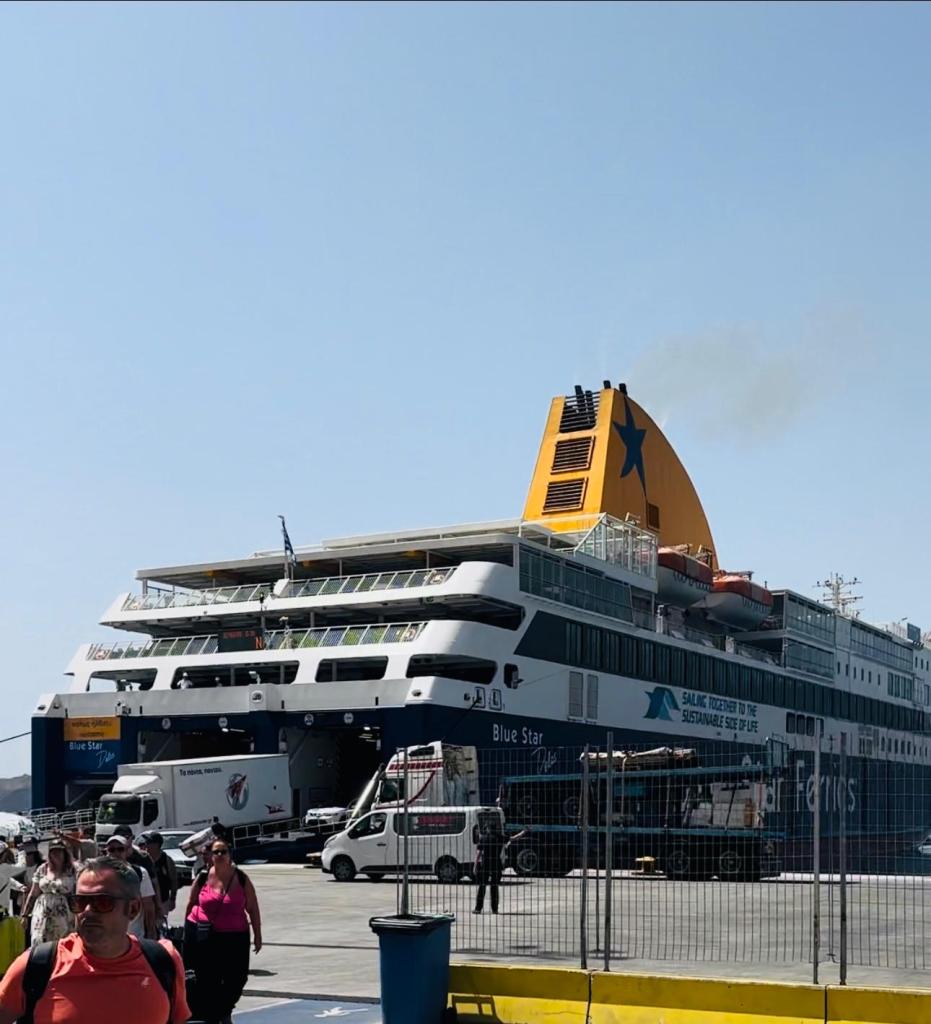
Despite the crowds waiting to get off in Santorini, there is no pushing. The doors open and people make their way to their waiting transport. As we wind our way up the mountain roads to the top of the cliffs, the port looks tiny below us. Santorini’s volcanic landscape feels immediately different than the other islands and the snaking traffic is a clue as to its popularity. After dumping our luggage at our hotel, we head to Thira (Fira) where we get our first glimpse of “that view” of the famous caldera edge which is lined with hotels and infinity pools below us.
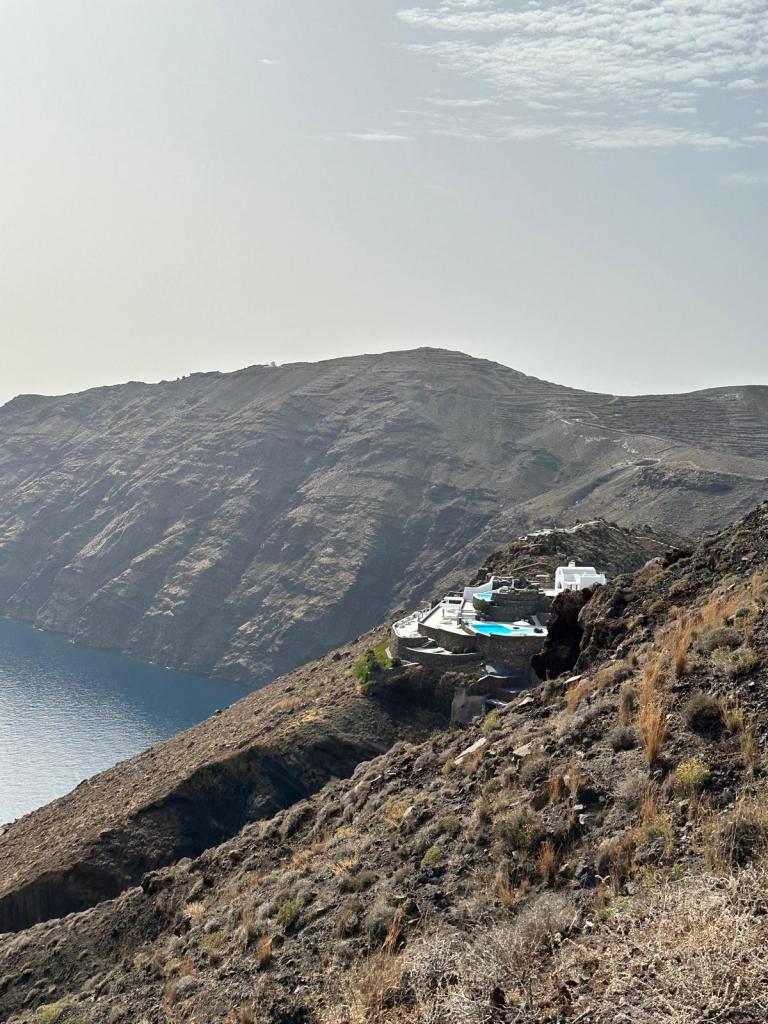
This is where we will begin our 11km hike to the other side of the caldera. Its 33 degrees and we take in the incredible views whilst sweating profusely and downing water at every opportunity.
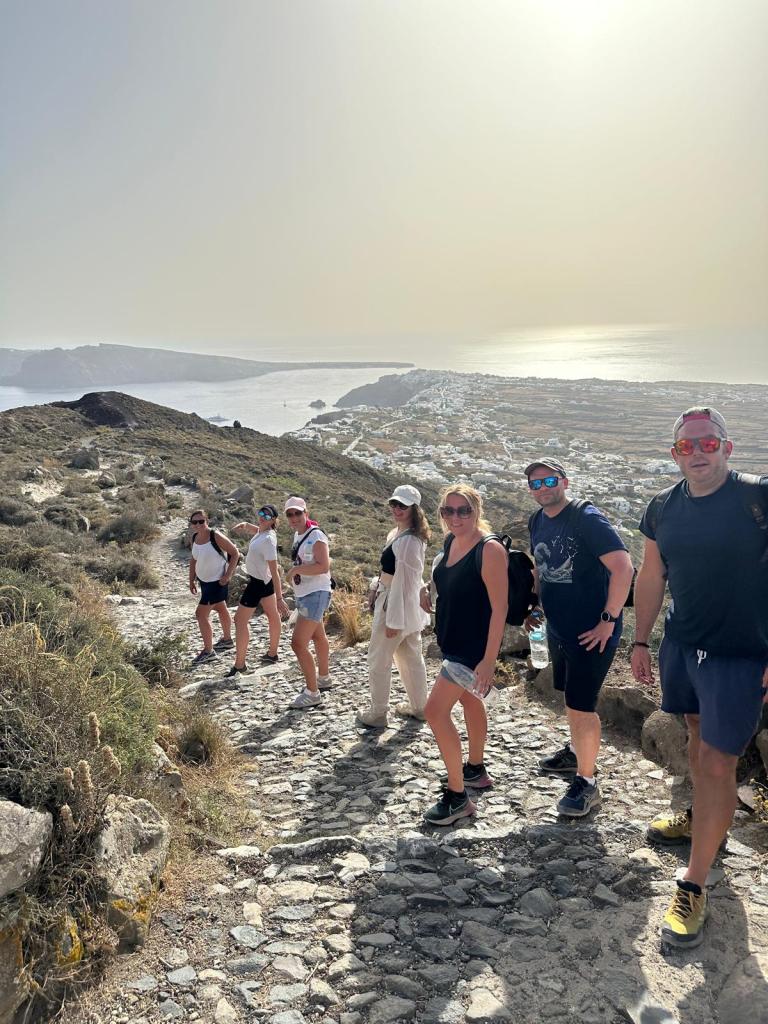
Arriving at Imerovigli, the highest point of the caldera edge, the views take our breath away. We can see the entire caldera and its multi-coloured cliffs dropping away. The white Cycladic towns of Fira and Firostefani perched on the edge at one end, our destination town, Oia, at the other and the blue waters 300 metres below in between.
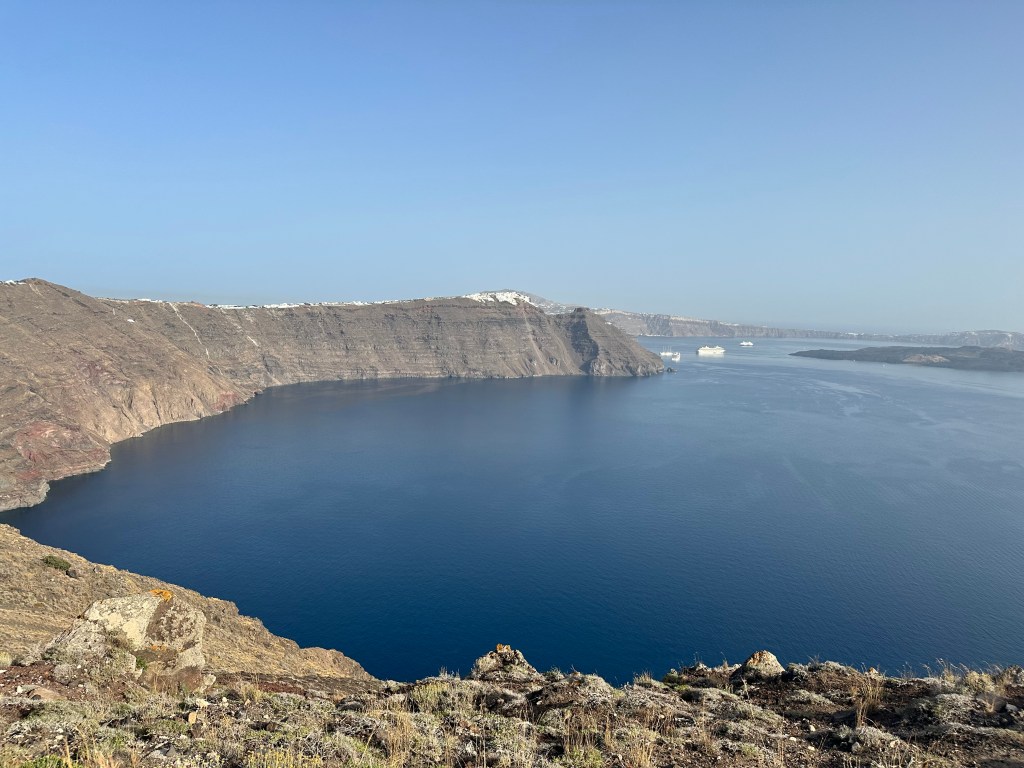
These are the breath-taking views which have made Santorini one of the most visited of all the Greek islands, and with multiple cruise ships docking in Fira daily, the sunset here can be a crowded affair. We wander into Oia at about 6.30pm and marvel at this most perfect of Cycladian villages. Built right into cliffs, the town’s white buildings cascade down the caldera sides, with many of the cave hotels and infinity pools nestling right into the rock face.

Oia is the ultimate in Insta heaven. The infamous blue domes, high-end boutiques, bars and restaurants and boutique hotels attract the global influencer set who can be spotted teetering across the white rooftops in floaty dresses in a bid to get “that” shot anytime before sunset. This beauty however comes at a price, and towards sunset, the tiny cobbled streets become rammed with day trippers, cruisers and Instagrammers jostling for the best photo spots. To get the famous shot of the blue domes church actually required a queue which I wasn’t prepared to do, this is the Santorini Instagram doesn’t show you.

One more dreamy evening spent in a rooftop Taverna full of speeches and cheers, and we are at the airport and heading back to reality. Our hearts are full of the beauty, stories, food and laughs we have had. I feel like I have learned and seen more of the real Greece in these 7 days than in 30 years of coming here, and this is why I love small group travel. Sam has been the ultimate hybrid guide- ultra-cool travel companion-travel concierge. For 7 days we have followed his instructions for where to be and when and lapped up all his incredible knowledge of this wonderful country. We can’t imagine how we can get ourselves from A to B back in real life now……
Thank you Sam and G Adventures!

Here are my top tips!

The Acropolis
- Pre-buy tickets online as they are only valid for timed slots
- Go early in the morning or after 5pm to avoid heat and the highest crowds
- Arrive 30 minutes before your slot or 10 minutes after it as the queues to enter build-up
- Take water – it is hot in the summer months
- Wear rubber-soled shoes or shoes with grips as the marble is very slippy!
- Get the audio guide to make sense of what you are seeing

Santorini
- Use this website to decide where to spend time and when to leave the towns and explore the rest of the island. It will show you how many cruise ships and how many people will be in both Oia and Fira each day
- Consider spending a night in Oia which will give you access to the town at the least busiest times – the morning and later in the evening.
- Oia in the afternoon is insanely hot, the sun bounces of the white everywhere. The afternoons would be a good time to chill in your hotel or go to the beach.

Ferry Travel
- Greek ferries are large, modern, comfortable and efficient and easily part of the holiday. What’s not to love about sitting on the deck watching beautiful islands drift by?
- Ferries have comfy leather seats around tables downstairs, as well as airline-style reclining seating areas where you can sleep and plastic table seating on the open decks. Inside areas are wonderfully air-conditioned.
- Smaller ferries have a café selling hot and cold drinks, sandwiches and cakes and the larger Blue Star ferries also have a fast food outlet, boutique, and small play area.
- Blue Star ferries are large, with 6 decks. Fast Ferries are smaller and Sea Jets the smallest.
- Buy your ticket online and then either print it or show the bar code from your phone on boarding. Take ID just incase although we were never asked for it and our leader told us the names do not matter. Note that all ferry tickets describe the passenger as male for some reason!
To organise your dream trip around the Greek Islands get in touch!
 joynerjournal.co.uk